Materials & finishes
Restaurant Furniture Materials and Specifications
Use this reference when writing or checking a furniture specification. Each section covers what the material is, where it fits, what to look for on a spec sheet, and how to maintain it.
Steel frames
Most metal chairs and industrial bar stools use steel tube or bar, welded and finished. Wall thickness is expressed as gauge; lower gauge means thicker steel, so 16-gauge outperforms 18-gauge in stiffness. Check weld quality at the joints and the presence of cross-bracing or stretchers on high-use seating.
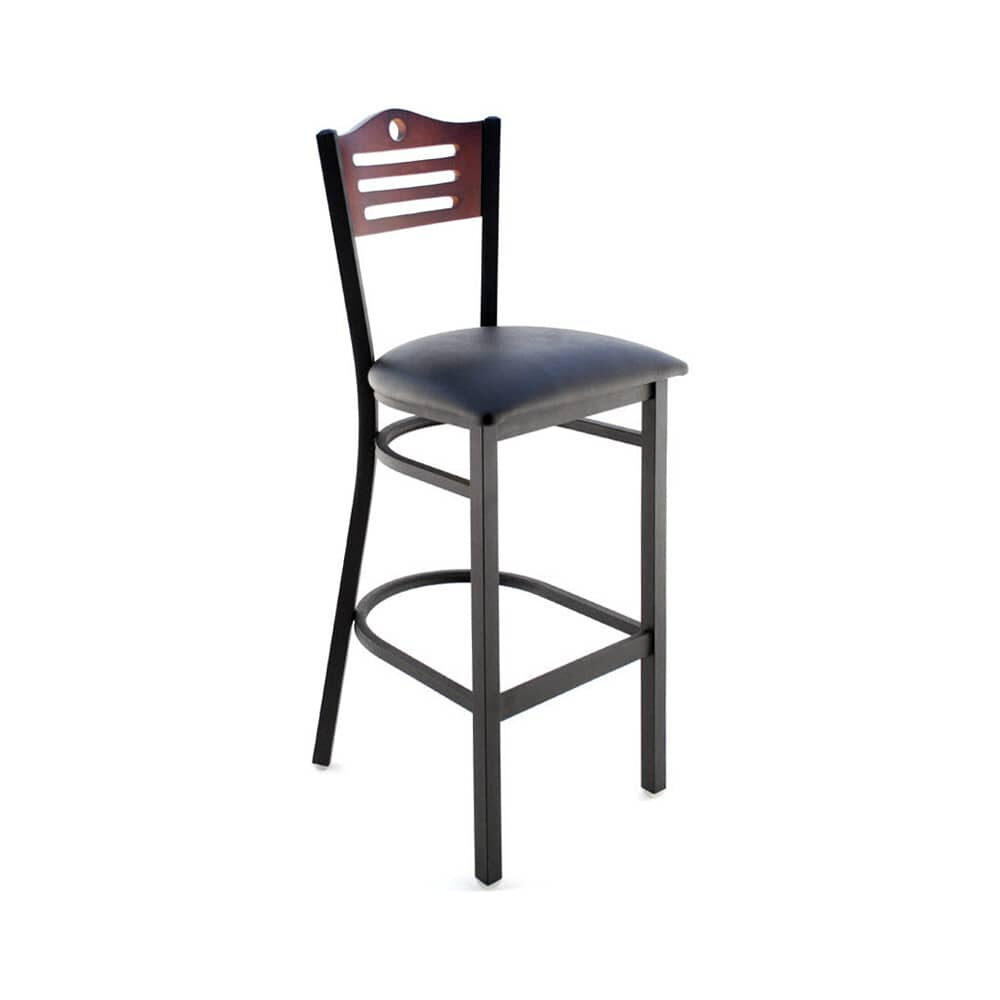


Steel corrodes if its finish is breached. Inspect leg tips, footrests, and stretchers regularly, and touch up chips promptly. Steel seating made for patio use, including many Tolix-style designs, is typically galvanized or powder coated for that reason, and the coating needs the same attention outdoors.
Powder coat
Powder coat is an electrostatically applied dry powder cured with heat into a continuous film. It's harder than liquid paint and available in solid, textured, metallic, and wood-grain finishes. Specify color by the product's finish name, and request a metal swatch where colors must match across product lines. Maintenance: mild detergent, soft cloth, no abrasive pads, and touch-up paint on chips before moisture reaches the base metal.
Aluminum and wood-look metal
Aluminum has roughly one third the density of steel and doesn't rust, which makes it the standard for outdoor frames and for aluminum restaurant chairs that are moved or stacked frequently. Finishes include powder coat, brushed, and printed wood grain. Clean with mild soap and water.
Wood-look metal deserves its own note. A printed grain finish over aluminum or steel gives the appearance of a wood chair without the joints that loosen or the finish that swells when wet. That makes metal chairs with a wood look a common specification for senior living dining rooms, healthcare cafeterias, and covered patios where cleanability is a priority.
Chrome and stainless steel
Chrome is electroplated over steel. It suits retro and diner specifications and indoor use only. Clean with a damp cloth and dry immediately; avoid abrasives, chlorine products, and salt exposure, all of which cause pitting.
Stainless steel appears in table bases, tops, and some outdoor frames. It resists corrosion far better than chrome but still shows fingerprints and can stain if chlorine sits on it. Wipe in the direction of the brushed grain.
Cast iron table bases
Cast iron is the common material for restaurant table bases because its mass lowers the center of gravity. Specify base spread against top size: a base should span at least about two thirds of a round top's diameter. Standard dining bases suit tops at 29 to 30 inches finished height; bar-height bases reach 41 to 42 inches. Leveling glides compensate for uneven floors and should be set at installation. Bases fasten to the underside of the top with screws, so confirm the top is thick enough for the mounting plate's hardware.
Hardwood frames
Beech is the most widely used species for restaurant chairs: dense, fine grained, and suitable for steam bending, which produces bentwood forms. Oak and ash are also common, with more pronounced grain. Joinery and corner blocks carry most of the load in a wood chair, so fasteners should be checked and retightened on a schedule. Wood chairs belong indoors and away from standing water, since end grain absorbs moisture and joints loosen as the wood swells and shrinks.
Wood finish is a two-part system. Stain sets the color, and a clear topcoat, typically lacquer or a catalyzed finish, provides resistance to moisture and cleaning chemicals. Stain names aren't standardized across product lines, so specify matching items with swatches. Worn finishes can be renewed by light abrasion and recoating.
Seat materials
Wood seats offer the lowest maintenance and can be refinished. They suit high-turnover service and quick meals.
Vinyl is the default upholstery for foodservice: moisture-resistant, easily cleaned, and available in many colors. Abrasion resistance is measured in double rubs; for busy commercial seating, look for ratings of 30,000 or more where the specification lists them. Clean with mild soap and water and dry; avoid bleach, solvents, and alcohol.
Fabric adds texture and acoustic absorption but requires stricter care. Confirm the cleaning code on every fabric. Code W: water-based cleaners are safe. Code S: solvent-based cleaners only. Code W/S: either type. Code X: vacuum or light brushing only, no liquids. If your project requires a specific flammability standard, check the product specification or ask before ordering.
Foam density determines how long a seat keeps its profile. Higher-density foam resists compression set; low-density foam bottoms out quickly under daily use.
Table tops
Laminate tops use high-pressure laminate bonded to particleboard or MDF, commonly about 1 to 1 1/4 inches thick. Edge options affect durability: T-mold vinyl edging absorbs impact and is replaceable, self edge matches the surface laminate, and wood edge needs solid wood care. Avoid direct heat. See laminate table tops.
Solid wood, plank, and butcher block table tops expand and contract with humidity. Checking and seam movement are natural and excluded from warranty. Keep tops away from HVAC vents and reseal when water no longer beads. For exterior tables, confirm the listing shows patio use; an indoor laminate top on a particleboard substrate will swell if it stays wet.
Granite and other stone tops are dense and heat-tolerant; specify a base rated for the weight, and reseal natural stone annually. Resin table tops are molded, lightweight, and suitable for exterior use. Compact laminate tops, pressed from resin-impregnated paper layers under high heat and pressure, are thin, weather-resistant, and scratch-resistant. Stainless steel tops are hygienic and durable; clean along the grain and avoid chlorine.
Outdoor materials
Aluminum: rust-free and light; secure or stack in high wind. Resin: UV-stabilized molded plastic, stackable, hose-cleanable. Synthetic teak: polymer slats with a teak appearance and no oiling. Poly lumber: dense recycled plastic boards, heavy and paint-free. Synthetic rattan: polyethylene weave over aluminum frames. See poly outdoor furniture and rattan patio chairs.
Glides and floor protection
Glides are the least expensive part of a chair and the one most often ignored. Plastic or nylon glides suit most hard floors; metal glides can mark them. Worn or missing glides scratch floors and make chairs rock, so check them during monthly inspections and keep replacements on hand. On polished concrete, tile, and wood floors, matching the glide to the floor protects both.
Specifying for institutional settings
Senior living and healthcare dining rooms benefit from armchairs with sturdy arms and slightly higher seats, which help residents sit and stand, and from vinyl or wood-look metal finishes that tolerate frequent disinfection. University and event spaces lean on stacking chairs and banquet chairs that store compactly. In each case, record the cleaning products your facility uses and check them against the upholstery's cleaning code before you specify.
Maintenance schedule
- Daily: wipe seats and tabletops with mild detergent; dry vinyl and chrome
- Weekly: check table bases for wobble and adjust glides
- Monthly: inspect frames for chips, loose fasteners, and worn glides
- Seasonally: reseal solid wood and stone as needed; clean, cover, or store outdoor furniture